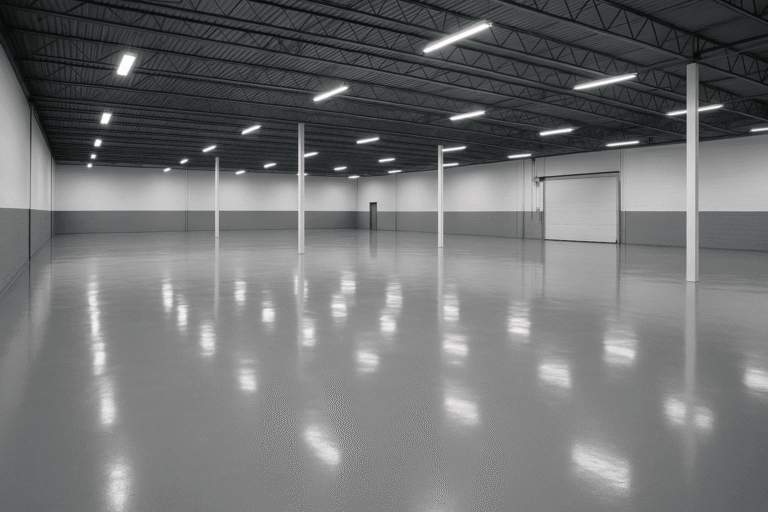
Choosing the Right Epoxy Coating for Your Project — A PolyArmor Guide
When it comes to surfacing solutions, epoxy coatings are among the most versatile and value-packed choices. From garage floors and patios to industrial warehouses and countertops, the right epoxy system can protect, enhance, and transform ordinary surfaces. But choose wrongly — and you risk peeling, cracking, poor adhesion, or dull finishes.
At PolyArmor, we believe in educating our customers first and delivering performance second. This guide will walk you through the various types of epoxy coatings, their unique advantages, and which ones align best with your specific project.
What Is an Epoxy Coating — And Why It Matters
An epoxy coating is a two-component system: a resin and a hardener. Once mixed, they cure (harden) to form a durable, continuous film that resists abrasion, chemicals, UV (in some formulations), staining, and traffic. Because the coating bonds to the substrate (e.g. concrete, steel, wood) it helps protect and strengthen the underlying material.
For homeowners, contractors, and facility managers alike, epoxy systems offer:
-
Excellent durability and longevity
-
Smooth, seamless surfaces that are easy to clean
-
Decorative flexibility (pigments, metallic effects, flakes)
-
Chemical and stain resistance
-
Varied cure times and thickness options
However, not all epoxy coatings are created equal. Differences in formulation, solids content, cure properties, and additives lead to very different performance profiles. Let’s break down the major types and where they shine.
Types of Epoxy Coatings & When to Use Them
1. High Solids Epoxy
What it is:
These epoxy systems contain a high percentage of active resin (often 70–85 % solids) and relatively low solvent/VOC levels.
Key strengths:
-
Builds a thicker film per coat
-
Better abrasion, impact, and chemical resistance
-
Less shrinkage upon curing
-
Lower VOC emissions compared to solvent-rich systems
Best applications:
Garage floors, light industrial floors, showrooms, warehouse surfaces — anywhere that sees traffic but doesn’t require extreme chemical exposure.
Considerations:
They may require precise mixing and correct environmental conditions (temperature, humidity). Additional coats may be needed to reach desired thickness.
2. 100% Solids Epoxy
What it is:
Also known as “solvent-free” epoxy, these coatings contain zero volatile solvents. After curing, there is no loss in thickness from evaporation.
Key strengths:
-
Maximum mechanical strength, durability, and chemical resistance
-
Very high adhesion and bond strength
-
Stable thickness after cure (no loss)
Best applications:
Industrial floors, heavy-duty environments, harsh chemical zones (labs, manufacturing, automotive repair). Because of the performance demands, installations are often handled by certified professionals.
Considerations:
Requires skilled application (proper surface prep, mixing, temperature control). The working window (pot life) is often limited, so installers must work efficiently.
3. Water-Based Epoxy
What it is:
These epoxies use water as a carrier (or dispersion medium) rather than strong solvents.
Key strengths:
-
Low odor and lower VOC emissions — safer for enclosed spaces
-
Easier cleanup (just water, before cure)
-
More forgiving for DIY applications
Best applications:
Basements, kitchens, interior walls, light-traffic residential areas where comfort and air quality matter.
Considerations:
They generally require more coats for equivalent durability, and their chemical resistance is typically lower than high solids or 100% solids types.
4. Self-Leveling Epoxy
What it is:
Formulated to flow and self-level, these epoxies settle into a smooth, even layer, filling minor surface irregularities.
Key strengths:
-
Produces a seamless, glass-like finish
-
Great for resurfaces, leveling, overlays
-
Excellent for achieving a “showroom” aesthetic
Best applications:
Patios, polished concrete interiors, high-end garages, decorative elements, or where the substrate needs some “flattening.”
Considerations:
Good surface preparation is essential (cracks, pinholes must be repaired). Air entrapment should be minimized (e.g. by using rollers or spiked shoes).
5. Metallic & Decorative Epoxy
What it is:
These epoxies incorporate metallic pigments, mica powders, or special additives to produce swirling, reflective, or marbled effects.
Key strengths:
-
Stunning visual appeal — perfect for retail showrooms, countertops, accent areas
-
Retains many of the beneficial coating properties (durability, stain resistance)
Best applications:
Countertops, walls, architectural features, boutique commercial spaces, or where aesthetics is as important as performance.
Considerations:
Requires experienced applicators to achieve the artistic finish. Mixing consistency, timing, and blending technique are critical to avoid blotches or color inconsistencies.
6. Fusion-Bonded/Epoxy Powder Coatings
What it is:
Also called fusion bonded epoxy (FBE), this is a dry powdered epoxy (resin + hardener) that melts and bonds to substrates (commonly steel) via heat and curing. Wikipedia
Key strengths:
-
Excellent corrosion resistance for steel
-
Strong adhesion and protective performance in piping, structural metals
Best applications:
Steel pipes, rebar, valves, industrial metal surfaces — typically industrial uses rather than flooring or decorative surfaces.
How to Choose the Right Epoxy for Your Project
Here’s a quick decision checklist you can use when selecting:
| Your Need | Recommended Epoxy Type | Reason |
|---|---|---|
| Heavy foot or vehicle traffic, moderate chemical exposure | 100% solid or high solids | Maximum durability and resistance |
| Confined interior space (low odor) | Water-based epoxy | Lower VOC, safer for closed areas |
| Smooth, seamless aesthetic | Self-leveling epoxy | Offers visually flawless finishes |
| Decorative or showroom feature | Metallic or pigmented epoxy | Combines performance + aesthetics |
| Steel or metal corrosion protection | Fusion-bonded epoxy / powder epoxy | Specialized for metal protection |
In many cases, a hybrid approach is used: e.g. start with a 100% solids or high solids base coat, then add a decorative or protective top coat. At PolyArmor, we specialize in customizing coatings to match the project — not forcing one product into all roles.
Why Choose PolyArmor?
At PolyArmor, we offer tailored epoxy solutions built for performance, durability, and aesthetics. Here’s what sets us apart:
-
Quality assurance & brand partnerships: We stock only premium raw materials and partner with proven suppliers.
-
Certified installers & training: Our team undergo rigorous training and follow strict quality protocols.
-
Project consulting & custom formulations: We don’t believe in “one size fits all.” We evaluate your substrate, usage, chemicals, climate, and budget to recommend the ideal system.
-
Comprehensive warranty: We stand behind our coatings with warranties that reflect our confidence in performance.
Want to see the difference? Browse some of our recent transformations and case studies [here ✓] (link to your gallery) or read more on epoxy fundamentals from trusted sources like CoatingsPro Magazine or Concrete Decor.
Request a Free Consultation
Let’s make sure your surfaces get the protection and beauty they deserve — without the guesswork. Fill out our Free Consultation Form or call us directly. Our experts will evaluate your project, recommend the optimal coating system, and provide a no-obligation quote.
Let’s Talk
Ready to take your project to the next level? Contact PolyArmor:
-
📧 Email: sales@polyarmormea.com
We’re here to answer your questions, assess your site conditions, and deliver a coating plan tailored for your needs. Let’s build something that lasts — beautifully.